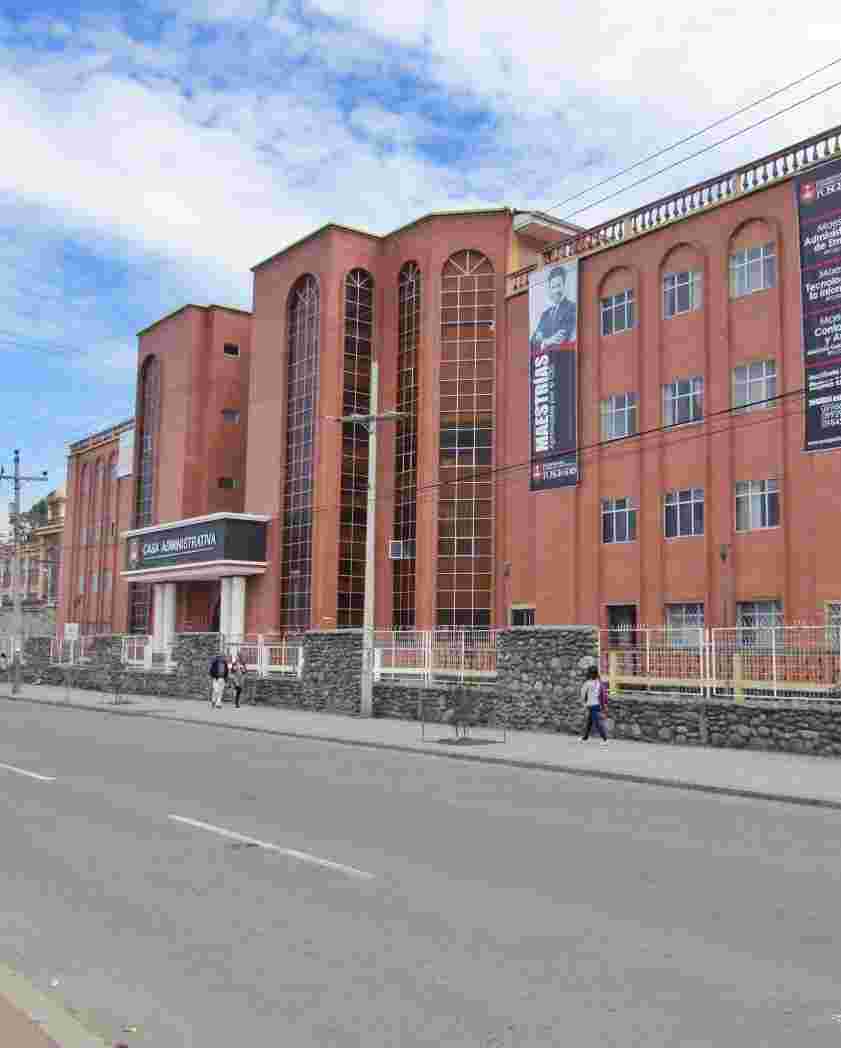
Proyectos de Titulación - Extensión Cañar - Administración de Empresas
URI permanente para esta colecciónhttps://dspace.ucacue.edu.ec/handle/ucacue/58
Examinar
Envíos recientes
Item type: Ítem , Access status: Embargo , Análisis del crecimiento de los negocios financiados mediante microcrédito en la Cooperativa de ahorro y crédito Jardín Azuayo sucursal El Tambo, durante el período 2025(Universidad Católica de Cuenca., 2026) Coronel Villavicencio, Esteban AndresThis study analyzed the growth of businesses financed through microcredit at the Jardín Azuayo Savings and Credit Cooperative, El Tambo branch, in 2025, examining the evolution of sales, the number of people employed, and the characteristics of the financing received. The study employed a quantitative approach, with a non-experimental, cross-sectional design and a descriptive-correlational scope. Researchers administered a survey to 130 entrepreneurs randomly selected from recipients of productive microloans, using a questionnaire validated by experts and demonstrating adequate internal consistency. The data were analyzed using descriptive statistics, the Wilcoxon test, and Spearman's correlation. The businesses surveyed were primarily commercial had been in operation for several years, and were owned by individuals with secondary education. The microloans were used primarily for working capital and to purchase merchandise. After financing, businesses moved into higher sales categories, showing a statistically significant difference and a large effect size, along with a descriptive increase in the number of people employed per business. Neither the loan amount nor the length of time the business had been in operation showed a significant relationship with the change in sales, while the loan term showed a positive, moderate, and significant relationship, possibly linked to the marked seasonal variation in sales. It concludes that the businesses significantly improved sales, with the loan term as the financial characteristic most closely associated with this change; however, the non-experimental design does not allow exclusive attribution of causality to financing. Keywords: microcredit, business growth, sales, small businesses, financial inclusion.Item type: Ítem , Access status: Embargo , Gestión de costos y su incidencia en la rentabilidad de la industria láctea del cantón Cañar(Universidad Católica de Cuenca., 2026) Barahona Sarmiento, Alexander ArturoCost management is a fundamental tool for planning, controlling, and the financial sustainability of businesses. This study aimed to analyze the relationship between cost management and profitability in the dairy industry of the Cañar canton. A quantitative approach was used, featuring a non-experimental, cross-sectional design and a correlational scope. The study population consisted of nine dairy companies, whose representatives were administered a 21-item questionnaire on cost management covering five dimensions. The global scale showed high internal consistency (α = 0.954). To analyze profitability, complete financial data from the nine companies were used to calculate gross margin, net margin, return on assets (ROA), return on equity (ROE), and production cost as a percentage of sales. The results indicate a favorable level of management (M = 3.87; SD = 0.48); cost control scored the highest (M = 4.02), while planning scored the lowest (M = 3.50). The correlations with gross margin, net margin, ROA, and production cost as a percentage of sales were not statistically significant. ROE showed a strong positive association (ρ = 0.749; exact p = 0.028), but this result should be interpreted as exploratory because of the small number of companies and the simultaneous evaluation of several indicators. In short, dairy companies should strengthen their planning and establish their costing systems, but the results do not allow for the establishment of causal relationships. Keywords: cost management, profitability, dairy industry, production costs.Item type: Ítem , Access status: Embargo , Pagos digitales y competitividad empresarial en el sector comercial del cantón Cañar(Universidad Católica de Cuenca., 2026) Narvaez Bernal, Abraham JosueABSTRACT Digital payments are important tools for modernizing business processes because they facilitate transactions, enhance financial traceability, and can improve business competitiveness. In the commercial sector of the Cañar canton, adopting digital payments to meet the needs of consumers who are increasingly familiar with electronic payment methods. This study aimed to analyze the relationship between digital payments and perceived business competitiveness in commercial establishments in the Cañar canton. The study was conducted using a quantitative approach, a non-experimental design, a cross-sectional study, and a correlational scope. Data were collected through a structured survey administered to owners, managers, administrators, and cashiers or sales clerks at commercial businesses. From the 406 questionnaires collected, a final analytical sample of 380 valid records was used. The results showed that 93.68% of businesses accept at least one digital payment method, with bank transfers being the most commonly used method at 51.84%. The overall digital payments index averaged 4.257, while business competitiveness averaged 4.263. The relationship between the two variables was positive, strong, and statistically significant (r = 0.940; p < 0.001). The main limitation of the study was its cross-sectional design and the use of perceptual measures; therefore, while the results allow for the identification of associations, they do not enable the determination of causal relationships or the direct generalization of the findings to other regions. Keywords: digital payments, technology adoption, business competitiveness, commercial sector, digital transformation.Item type: Ítem , Access status: Acceso Abierto , Estudio de factibilidad para la producción y comercialización de cuyes en la Provincia del Cañar(Universidad Católica de Cuenca., 2026) Tenesaca Guallpa, SantiagoThe production and marketing of guinea pigs offer an alternative for boosting the income of small-scale farmers in the province of Cañar, given the growing acceptance and demand for this source of protein. This research aimed to evaluate the feasibility of guinea pig production and marketing through market, technical, organizational, economic, and financial studies. A mixed-methods study was conducted, with a descriptive scope and a non-experimental cross-sectional design, based on fieldwork and a literature review. The information was obtained through structured surveys administered to 382 families in the province of Cañar and 20 guinea pig producers. The market study showed that 82% of respondents consume guinea pig meat, and 96% expressed a willingness to purchase the product from a local organization. The technical study determined an annual production capacity of 4,800 guinea pigs, intended for sale both live and slaughtered. The economic and financial evaluation showed a Net Present Value (NPV) of USD 4,039.34, an Internal Rate of Return (IRR) of 23%, a benefit-to-cost ratio of 1.18, and a payback period of just over four years, within the five-year evaluation horizon. It is concluded that the project is feasible from commercial, technical, organizational, economic, and financial perspectives. However, it requires efficient cost control and meeting production and sales targets to ensure its sustainability.Item type: Ítem , Access status: Acceso Abierto , Proyecto de Titulación embargado con fines de publicación de impacto(Universidad Católica de Cuenca., 2026) Loja Loja, María DanielaItem type: Ítem , Access status: Acceso Abierto , Proyecto de Titulación embargado con fines de publicación de impacto(Universidad Católica de Cuenca., 2026) Chicayza Granda, Ana BeatrizItem type: Ítem , Access status: Acceso Abierto , Proyecto de Titulación embargado con fines de publicación de impacto(Universidad Católica de Cuenca., 2026) Patiño Neira, Johanna PaolaItem type: Ítem , Access status: Embargo , Inteligencia Emocional y su influencia en el desempeño laboral en el Sector Público de la ciudad Cañar(Universidad Católica de Cuenca., 2026) Quindi Pichasaca, Cristian FabricioEmotional intelligence (EI) is an important construct for understanding its relationship with various aspects of job performance in public organizations. The objective was to determine the relationship between emotional intelligence and job performance among public employees in the city of Cañar. A quantitative, descriptive-correlational, non-experimental, cross-sectional study was conducted. The population consisted of 936 public employees, and the sample consisted of 273 participants, distributed proportionally among the institutions with individual random selection. Contextualized 12-item versions based on the Wong and Law Emotional Intelligence Scale (WLEIS) and the Individual Work Performance Questionnaire (IWPQ) were administered. Internal consistency was estimated; the measurement structure was examined using confirmatory factor analysis, and associations were analyzed using Spearman’s rho, 5,000 bootstrap resamples, and multivariate models adjusted for sociodemographic variables. Overall EI was positively associated with corrected overall performance (ρ = 0.631; p < 0.001; 95% CI: 0.538–0.710), and the association remained after multivariate adjustment (β = 0.603; p < 0.001). Multidimensional factor models showed better fit than unidimensional solutions. The dimensional pattern revealed distinct associations between emotional abilities and performance facets. In conclusion, EI is significantly associated with job performance in the study population, and that relationship has a multidimensional configuration, although the study design does not allow for the establishment of causality. Keywords: emotional intelligence, job performance, contextual performance, counterproductive behaviors, public administration.Item type: Ítem , Access status: Acceso Abierto , Análisis de la eficiencia operativa en los procesos de extracción de materiales pétreos y su relación con la productividad: Estudio de caso en la empresa Buenos(Universidad Católica de Cuenca., 2026) Caguana Balvoa, Juan PabloThe limited ability to optimize the use of operational resources is a common problem among small-scale mining companies, given its direct impact on productivity levels and economic sustainability. In this context, the objective of the research was to analyze the operational efficiency of the Buenos Hermanos mining company and its relationship to productivity during the 2021–2025 period. The methodology was based on a quantitative approach, with a descriptive and correlational scope, using a longitudinal analysis of operational and production records related to fuel consumption, operating costs, production volume, and revenue. The results showed significant monthly variations in each of the indicators for the variables analyzed: Notable characteristics for a given month included a peak energy productivity of 30.23 m³/gal in June 2021, a peak production of 800 m³ in November 2021, and a peak revenue of USD 5,357.00 in the same month. Likewise, Spearman’s correlation coefficient indicated a significant positive relationship between energy productivity and production volume (ρ = 0.814; p < 0.01), as well as between energy productivity and revenue (ρ = 0.781; p < 0.01). In conclusion, operational efficiency directly influences a company’s productivity and economic performance, making it a key determinant of the competitiveness and sustainability of extractive operations. Keywords: operational efficiency, productivity, production processes, stone materials, longitudinal analysis.Item type: Ítem , Access status: Embargo , Inversión de remesas y las condiciones económicas de los hogares del Cantón Suscal(Universidad Católica de Cuenca., 2026) Loja Tamay, Jorge LuiInternational migration and remittances are significant phenomena due to their impact on the livelihood, savings, and investment strategies of recipient families. This study aimed to analyze the relationship between remittance investment and the economic conditions of recipient households in the Suscal canton, Cañar province, Ecuador. A quantitative, correlational, non-experimental, cross-sectional study was conducted with 308 households selected through random probability sampling. Data were collected using a 42-question questionnaire, including 32 statements on a five-point Likert scale. The instrument showed high overall internal consistency (α = 0.917), as well as high internal consistency for remittance investment (α = 0.874) and economic conditions (α = 0.914). The analysis included descriptive statistics, 95% confidence intervals, and Spearman’s rho correlations. A positive, moderate, and statistically significant association was identified between the variables (ρ = 0.455; p < 0.001). Consumption had the highest mean (M = 4.19; 95% CI [4.06; 4.32]), followed by investment in assets (M = 4.04; 95% CI [3.92; 4.17]); productive investment had the lowest value (M = 2.62; 95% CI [2.46; 2.77]). The strongest relationship was observed between investment in assets and economic stability (ρ = 0.485), followed by productive investment and household wealth (ρ = 0.326). It is concluded that diversification in the use of remittances is associated with better economic conditions, although their limited focus on productive activities restricts the generation of sustainable income. Keywords: migration, remittances, economic conditions, investment, consumption.Item type: Ítem , Access status: Embargo , Redes sociales y preferencia de compra en la generación Z del Cantón Cañar: Mediación del engagement y la confianza digital(Universidad Católica de Cuenca., 2026) Castillo Falcon , Jessica PriscilaThe growth of e-commerce and the adoption of digital technologies have transformed consumer behavior, fostering interaction between physical and digital channels during the purchasing process. The objective was to analyze the behavior of consumers in the Cañar Canton regarding their purchasing decisions in e-commerce and brick-and-mortar stores and to determine whether these channels exhibit a substitutive or complementary relationship. The study was conducted using a quantitative approach with a descriptive and correlational focus, a non-experimental design, and a cross-sectional design. Data were collected through a structured survey administered to adult consumers in the Cañar Canton and analyzed using descriptive statistics, tests of association, and binary logistic regression. The results show that e-commerce is used primarily for its variety of products, ease of price comparison, and convenience, while brick-and-mortar stores are preferred for the trust they inspire, the ability to inspect products in person, and personalized service. In addition, a higher prevalence of webrooming (38.6%) was identified compared to showrooming (29.9%), highlighting the integration of both channels in the purchasing decision. In conclusion, consumer behavior follows a model of complementarity between e-commerce and brick-and-mortar stores, as 75.6% of costumers intend to continue shopping online. Therefore, organizations must implement omnichannel strategies that integrate the strengths of both channels to optimize the customer experience, strengthen trust, and increase their competitiveness in a more digitized business environment. Keywords: e-commerce, brick-and-mortar stores, consumer behavior, purchasing decisions, digital technologies.Item type: Ítem , Access status: Embargo , Comercio electrónico y tiendas físicas: Análisis desde el comportamiento del consumidor(Universidad Católica de Cuenca., 2026) Yupa Agualema, Marlene ElizabethThe growth of e-commerce and the adoption of digital technologies have transformed consumer behavior, fostering interaction between physical and digital channels during the purchasing process. The objective was to analyze the behavior of consumers in the Cañar Canton regarding their purchasing decisions in e-commerce and brick-and-mortar stores and to determine whether these channels exhibit a substitutive or complementary relationship. The study was conducted using a quantitative approach with a descriptive and correlational focus, a non-experimental design, and a cross-sectional design. Data were collected through a structured survey administered to adult consumers in the Cañar Canton and analyzed using descriptive statistics, tests of association, and binary logistic regression. The results show that e-commerce is used primarily for its variety of products, ease of price comparison, and convenience, while brick-and-mortar stores are preferred for the trust they inspire, the ability to inspect products in person, and personalized service. In addition, a higher prevalence of webrooming (38.6%) was identified compared to showrooming (29.9%), highlighting the integration of both channels in the purchasing decision. In conclusion, consumer behavior follows a model of complementarity between e-commerce and brick-and-mortar stores, as 75.6% of costumers intend to continue shopping online. Therefore, organizations must implement omnichannel strategies that integrate the strengths of both channels to optimize the customer experience, strengthen trust, and increase their competitiveness in a more digitized business environment. Keywords: e-commerce, brick-and-mortar stores, consumer behavior, purchasing decisions, digital technologies.Item type: Ítem , Access status: Embargo , Competitividad de las agencias de viaje del Cantón Cañar: adaptación estratégica frente a las nuevas dinámicas del consumidor turístico(Universidad Católica de Cuenca., 2026) Quizhpi Huasco, Martha VerónicaCompetitiveness in the tourism sector has become an essential element for the sustainability of travel agencies, in a context marked by digitization, the transformation of business models, and changes in tourist consumer behavior. In this context, this study aimed to analyze the competitiveness of travel agencies in the Cañar canton, considering their capacity for strategic adaptation to new consumer dynamics. For this purpose, a quantitative, descriptive methodology was used under a non-experimental cross-sectional design. Data collection was carried out by applying structured questionnaires to seven travel agencies registered in the city of Cañar and 52 customers. The results showed a high level of strategic adaptation in dimensions such as digital transformation, innovation, organizational management, and strategic relationships, highlighting the incorporation of technological tools, organizational strengthening, and the establishment of alliances as key factors for service improvement. In terms of competitiveness, travel agencies rated their service quality and business performance highly; however, customer perceptions reflected lower levels, which reveals a gap that requires improvement strategies. In summary, the competitiveness of travel agencies in the Cañar canton is determined by their capacity for strategic adaptation, which directly affects their positioning and customer loyalty. Keywords: travel agencies, competitiveness, strategic adaptation, dynamics, consumption, tourist consumer.Item type: Ítem , Access status: Embargo , Aporte de los emprendedores de vestimenta artesanal al desarrollo económico en el cantón Cañar(Universidad Católica de Cuenca., 2026) Zhau Pomavilla, Nube RocioThis research aimed to analyze the contribution of artisanal clothing entrepreneurs to the economic development of the Cañar canton, considering its economic, social, cultural, and business management dimensions. The study was conducted using a mixed approach, with a descriptive and analytical design, through the application of surveys to artisanal clothing entrepreneurs and semi-structured interviews with artisans and institutional actors linked to the sector. The findings show that artisanal clothing enterprises contribute considerably to the local economy, especially by creating income for families. In addition, the significant social impact of the high participation of women artisans is recognized, which positions these initiatives as a means to strengthen the social fabric and promote economic inclusion. In this context, although the artisanal clothing entrepreneurship has high economic, social, and cultural value, its contribution to the economic development of the Cañar canton requires the implementation of comprehensive strategies that combine training, market access, productive innovation, and sustained public policies. Keywords: handicrafts, cultural industries, entrepreneurship, local development, cultural heritage.Item type: Ítem , Access status: Embargo , Percepción del talento humano sobre la incorporación futura de la inteligencia artificial en los procesos de recursos humanos en el municipio del Cantón Suscal(Universidad Católica de Cuenca., 2026) Pichisaca Huerta, Sara NiustaThis study analyzed the perception of the human talent within the Municipality of the canton of Suscal, Province of Cañar, regarding the future incorporation of artificial intelligence (AI) in Human Resources processes, with the purpose of identifying the levels of knowledge, attitudes, perceptions, concerns and expectations of the staff in the possible implementation of this technology in institutional management. The research was developed under a quantitative, descriptive, non-experimental and cross-sectional design. The study population consisted of 50 employees of the municipality, to whom a survey technique was applied through a structured questionnaire of 30 items, measured on a Likert-type scale. The results show that the general perception of artificial intelligence is favorable, with high levels of acceptance regarding its potential benefits in institutional modernization, the optimization of Human Resources processes, and the improvement of job performance, although concerns were identified regarding job stability, the possible replacement of job functions, and the protection of personal data. In addition, the staff reported having key skills in the use of digital tools and predisposition toward training processes. However, gaps were identified in specific knowledge about artificial intelligence. In conclusion, favorable perceptions are identified for the future incorporation of artificial intelligence within the Municipality of the canton of Suscal, provided that its implementation is accompanied by training processes and ethical guidelines that reduce uncertainty and guarantee responsible technological adoption. Keywords: artificial intelligence, perception of human talent, digitization, processes, human talent.Item type: Ítem , Access status: Embargo , Análisis de las prácticas de sostenibilidad de la Asociación de servicios de reciclaje indígenas cañaris (ASORIC) de la ciudad de Cañar(Universidad Católica de Cuenca., 2026) Guaman Pomavilla, Jessica MercedeIn the organizational context, sustainability plays a strategic role in local development and responsible waste management. Therefore, the objective of this study was to analyze the sustainability practices implemented by the Cañaris Indigenous Recycling Services Association (ASORIC, by its Spanish acronym) from the environmental, social, and economic dimensions. The research was conducted using a quantitative approach, with a descriptive level and a non-experimental design, through the application of structured surveys to the members of the association. The results revealed a positive assessment in the environmental dimension, highlighting well-established practices of waste separation, classification, and reuse, which contribute to reducing the volume of waste disposed of in open dumps and sanitary landfills. In the social dimension, advantages were identified in collaborative work, intercultural respect, and a sense of belonging; however, opportunities for improvement were observed in internal participation and decision-making processes. Regarding the economic dimension, the findings showed that recycling activities generate income that allows members to meet their basic needs. Nevertheless, perceptions of instability and limited profitability persist, representing a challenge for long-term sustainability. Based on these findings, it is concluded that ASORIC makes a significant environmental and social contribution, while it requires strengthening its economic management to consolidate a comprehensive sustainability model. Keywords: recycling, association, social system, environmental managementItem type: Ítem , Access status: Embargo , Emprendimiento Femenino: Desafíos y Oportunidades desde la perspectiva de la Competitividad(Universidad Católica de Cuenca., 2026) Quishpilema Simbayna, Ruth EstherFemale entrepreneurship is a relevant element for economic and social development, although it develops in an environment characterized by persistent challenges, structural gaps, and gender inequalities. In this context, this study aims to analyze the challenges and opportunities of female entrepreneurship, from the perspective of competitiveness; to this end, a mixed methodological approach was adopted, with a correlational scope, field design, and cross-sectional approach. The research was based on a non-probabilistic sample of 150 enterprises led by women, integrating descriptive statistics techniques and the structural equation modeling based on partial least squares (PLS-SEM) for data analysis. The results show that female entrepreneurship arises mainly as a response to the lack of formal employment, which reinforces its subsistence nature. Among the main challenges are limitations in access to the financial system and weaknesses in administrative management. However, entrepreneurs express a positive perception of their competitiveness, based on the quality of their products, their openness to the use of technological tools, and the exercise of a leadership that promotes businesses sustainability. In conclusion, women-led enterprises make visible advances in their processes of consolidation in the market, resilience, adaptation, and business leadership. Despite the persistence of structural restrictions and gender gaps, factors associated with the adoption of technology, innovation, and support networks emerge as key elements to strengthen the competitiveness and sustainability of these enterprises. Keywords: entrepreneurship, development strategy, economic system, leadership, innovation.Item type: Ítem , Access status: Embargo , La digitalización empresarial como estrategia de sostenibilidad en las Mipymes del cantón Cañar.(Universidad Católica de Cuenca., 2026) Guillca Alvarez, Stalyn ManuelDigitization has become a key strategic factor for the competitiveness and sustainability of micro, small and medium-sized enterprises (MSMEs). In this context, this study aimed to evaluate how business digitization and organizational capabilities influence the sustainability of MSMEs in the Cañar canton. A quantitative approach was adopted, using a non-experimental, descriptive-correlational, cross-sectional design. Data collection was conducted using a questionnaire comprising 27 items on a five-point Likert scale, administered to a sample of 100 MSMEs. The instrument showed high reliability with a Cronbach’s alpha of 0.84. The results showed an average level of digital maturity (M = 3.43), with a greater predisposition of human talent toward the use of technologies (M = 3.60) compared to limitations in digital infrastructure and resources (M = 3.18). The inferential analysis using Spearman's rho coefficient showed positive and statistically significant correlations among the variables analyzed. The relationship between business digitization and organizational capabilities was moderate (rho = 0.475**), while the associations between digitization and sustainability (rho = 0.301**) and between organizational capabilities and sustainability (rho = 0.286*) showed low magnitudes. It is concluded that strengthening internal capabilities favors the adoption of technologies and their integration with sustainable practices. This indicates the importance of investing in technological infrastructure, human talent training, and sustainability-oriented organizational management. Keywords: business digitization, organizational capabilities, business sustainability, MSMEs, digital maturity.Item type: Ítem , Access status: Acceso Abierto , Análisis de las estrategias de crecimiento y posicionamiento competitivo de las cooperativas de ahorro y crédito en la ciudad de Cañar(Universidad Católica de Cuenca., 2025) Yupangui Guallpa, Maria MarthaThe strengthening of the cooperative sector in Ecuador has created the need to examine the factors that influence its sustainability and competitiveness within an increasingly digitalized financial environment. In this context, this study aimed to analyze the growth and competitive positioning strategies implemented by segment-one savings and credit cooperatives in the city of Cañar. The research followed a mixed approach, through the application of semi-structured interviews with representatives of five cooperatives and surveys of 100 members. These instruments made it possible to identify perceptions and assessments regarding the use of digital channels, the level of automation, service accessibility, financial education, and the competitive position relative to traditional banking. The results reveal that, although cooperatives have made progress in adopting technological tools such as websites, mobile applications, and messaging services, they still face limitations in usability, process automation and the implementation of digital financial education programs. Likewise, it was observed that the competitive positioning compared to traditional banking is perceived as intermediate or unfavorable by a significant part of the members, which affects loyalty. In conclusion, although the cooperatives in Cañar have initiated processes of digital transformation and service diversification, these efforts remain incipient. To achieve sustainable growth, it is necessary to integrate technological innovation with inclusive financial education strategies that strengthen trust and consolidate their role in local economic development.Item type: Ítem , Access status: Acceso Abierto , Evaluación de las actitudes emprendedoras en futuros gestores empresariales universitarios(Universidad Católica de Cuenca., 2025) Pomavilla Zhinin, Noemi RocioEntrepreneurship has become a strategic pillar of economic and social development, especially in contexts where young university students promote innovation and job creation. This study aimed to analyze the entrepreneurial profile of Business Administration students at the Catholic University of Cuenca, Cañar Campus, to identify their main strengths and weaknesses regarding their willingness to engage in entrepreneurship. The research adopted a quantitative approach and descriptive design, using a structured survey administered to a sample of 71 students selected from a population of 90, using a questionnaire adapted from the Entrepreneurial Intention Questionnaire (EIQ) by Liñán and Chen, which evaluated criteria such as autonomy, innovation, self-confidence, risk tolerance, need for achievement, attitudes towards entrepreneurship, social influence, entrepreneurial intention, and university education. The results showed strengths in autonomy, innovation, and the need for achievement, reflected in responsibility, creativity, and goal orientation. However, weaknesses in risk tolerance and failure management were identified. It is concluded that students have a favorable entrepreneurial profile characterized by traits such as creativity and self-confidence; however, this potential must be consolidated through training strategies that strengthen critical aspects, such as risk tolerance and decision-making in contexts of uncertainty.